As the retail landscape in Central Ohio continues to evolve, shopping center owners and property managers face increasing pressure to attract foot traffic, retain high-value tenants, and maximize the profitability of their commercial real estate assets. While traditional static signage has served the industry well for decades, the integration of digital signage displays is rapidly becoming the new standard for premium retail destinations.
Upgrading to digital monument signs and exterior LED message centers is no longer just a technological novelty; it is a strategic capital improvement that delivers a measurable return on investment (ROI). For Columbus shopping centers competing for consumer attention along busy corridors, understanding the financial and operational benefits of digital signage is critical.
Dynamic Tenant Advertising and Increased Revenue
The most direct and immediate ROI from a digital signage upgrade comes from the ability to monetize the display space. Traditional multi-tenant pylon or monument signs are inherently limited by physical space. A shopping center with twenty tenants might only have room to display the logos of the five anchor stores, leaving the smaller, inline tenants without critical street-level visibility.
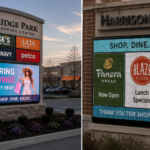
Digital LED displays eliminate this physical constraint. A high-resolution digital message center can rotate through advertisements for every tenant in the plaza. Property managers can leverage this capability to generate new revenue streams. By offering premium advertising slots, seasonal promotions, or high-frequency rotations on the digital board, landlords can charge tenants an additional marketing fee or incorporate the value into higher lease rates.
For the tenants, the ability to advertise daily specials, new inventory, or hiring events directly to passing Columbus traffic is incredibly valuable, making the shopping center a more attractive place to do business.
Unmatched Agility and Reduced Maintenance Costs
Updating a traditional static sign is a slow and costly process. When a tenant moves out and a new one moves in, the property manager must hire a sign company to manufacture a new acrylic or polycarbonate sign face, dispatch a bucket truck, and physically install the new panel. This process can take weeks and cost hundreds of dollars per occurrence. In a large shopping center with frequent tenant turnover, these maintenance costs quickly compound.
Digital signage provides unmatched operational agility. When a new tenant signs a lease, their logo and promotional messaging can be uploaded to the digital display instantly via cloud-based software. There are no manufacturing delays, no installation fees, and no bucket trucks required. Over the lifespan of the digital sign, the elimination of these recurring physical updates represents a significant reduction in operational expenditure.
Community Engagement and Increased Dwell Time
Modern digital signage is not limited to displaying tenant logos; it is a powerful tool for community engagement. Shopping centers can use their LED displays to broadcast time, temperature, public service announcements, local Columbus sports scores, or alerts for community events hosted at the plaza.
This dynamic content trains passing motorists to look at the sign every time they drive by, significantly increasing the overall visibility of the shopping center. Furthermore, when digital displays are utilized strategically within the plaza—such as wayfinding kiosks or interactive directories—they enhance the customer experience. A better experience leads to increased “dwell time,” meaning shoppers stay longer and spend more money across multiple tenants.
The Long-Term Value of Modernization
Beyond the direct financial metrics, upgrading to digital signage fundamentally modernizes the aesthetic of the shopping center. A bright, high-resolution LED display signals to the Columbus market that the property is vibrant, active, and well-maintained.
This perception of premium quality is invaluable when negotiating leases with national retail brands or high-end local boutiques. A modernized property commands higher valuations and ensures the shopping center remains a competitive, revenue-generating asset for years to come.
Frequently Asked Questions
How long does a commercial digital LED sign typically last?
High-quality commercial LED displays are built to withstand harsh weather conditions and typically have a lifespan of 100,000 hours of continuous use, which equates to roughly 10 to 11 years. Regular maintenance and proper software updates can help maximize this lifespan.
Are digital signs difficult to program and update?
No, modern digital signs are controlled via intuitive, cloud-based software. Property managers can log in from any computer or smartphone, upload new images or videos, schedule specific advertisements to run at certain times of the day, and update tenant messaging in real-time without any specialized technical skills.
Do digital signs require special permits in Columbus?
Yes, the City of Columbus and surrounding municipalities have strict zoning codes regarding digital and Electronic Message Center (EMC) signs. These codes regulate the size, brightness, and how frequently the message is allowed to change (hold time). Partnering with an experienced local sign company is essential to navigate the permitting process successfully.
Will a digital sign increase my property’s utility bill significantly?
While digital signs do consume electricity, modern LED technology is highly energy-efficient. Furthermore, most commercial digital signs are equipped with ambient light sensors that automatically dim the display at night and brighten it during the day, optimizing power consumption and minimizing the impact on your utility bill.
Recent Posts